Embark on a journey to the world’s most sun-soaked destinations, where the sun’s embrace enhances landscapes, cultures, and adventures.
The sun transforms mornings into golden spectacles and evenings into a painting of warm colors. For those of us with wanderlust or who love basking in sunlight, discovering destinations rich in sunshine is like uncovering hidden gems. Whether you’re planning your next journey or simply dreaming of sun-soaked places, allow me to guide you. We’ll venture into five countries where the sun generously bestows more hours of light than elsewhere, inviting us to bask in its glory. Grab your sunscreen; it’s time to chase the sun!
1. Egypt
Envision the Great Pyramids of Giza bathed in the sun’s golden light — a breathtaking scene. Egypt’s expansive deserts and rich history soak up sunny days. Cairo shines under roughly 3,800 hours of sunshine yearly. Here, sunlight doesn’t just brighten; it breathes life into bustling markets and the tranquil Nile River, narrating tales as ancient as civilization itself.
2. Australia
Welcome to the perpetual summer of Australia, particularly along the Western Australia coast and the vast Outback. Here, the sun is a constant, shining on cities like Perth for about 3,200 hours each year. But Australia’s sunshine isn’t just plentiful; it nurtures vibrant life, from Sydney’s dynamic streets to the majestic Great Barrier Reef, showcasing the sun as nature’s finest artist.
3. United States (Specifically Arizona and Nevada)
Among the diverse landscapes of the United States, Arizona and Nevada shine with their amount of sun. Yuma, Arizona, revels in around 4,000 sunshine hours annually, standing as one of the planet’s sunniest locales. The sun here promotes a lifestyle of adventure amidst the grandeur of the Grand Canyon and the vivacity of Las Vegas, where sunny days lead to starry nights.
4. South Africa
Blessed with varied ecosystems and breathtaking scenery, South Africa enjoys abundant sunshine, especially in the Northern Cape, boasting about 3,500 hours of sunshine each year. Beyond warming the land, the sun illuminates South Africa’s soul — from Cape Town’s vibrant culture to the wild expanses of Kruger National Park, showcasing the sun’s role in highlighting the beauty of diversity.
5. Spain
Spain basks in the sun’s embrace, with places like Andalusia enjoying over 3,000 hours of sunshine annually. But it’s the integration of sunlight into daily life that distinguishes Spain; it shapes the culture, from leisurely afternoons in Barcelona’s cafés to spirited flamenco dances in Seville. The sun here transforms meals into communal experiences and siestas into an art form.
In these sun-drenched nations, the sun does more than govern the day; it shapes landscapes, cultures, and memories. These destinations serve as a reminder that sometimes, all it takes is a little sunshine to light up our adventures. Whether drawn to Egypt’s historical charm, Australia’s vibrant ecosystems, the adventurous American spirit, South Africa’s diverse beauty, or Spain’s cultural richness, the sun invites you to explore. Here’s to embracing the sunlight and finding joy in its embrace on our travels. Safe journeys!
To count the ways, I dare to comprehend
such finite love defined in written line,
for quantity shall never find an end
to love that lets infinity define.
A Summer’s day, to love shall not compare,
though shines to bathe your beauty in its light,
and as it wanes, waits breathlessly to share
the passion of a sultry Summer’s night.
To laureates and bards of metaphor,
each scribbled phrase, I bid them credit due,
but all their words and phrases heretofore
can ne’er describe this love I have for you.
When words fall short and poetry departs,
love’s silence fills the cockles of our hearts.
What beauty reflected in love’s fair eyes,
a passion treasured beyond all measure.
As ardor stirred flames, I failed to disguise
the need in my loins ere want of pleasure.
As sweet the music I discern profound,
tis more honeyed your lips when touching mine.
Oh! My pained heart shall beckon love resound,
my moonstruck maiden, unearthly divine.
Mute, I cannot be, so near your soft breasts.
This besotted man has but scant more breath.
Grant me your pure love, not in mere request,
but with an angelic kiss ‘fore my death.
I beg thee allow the stars remain bright.
Give yourself to me ere the end of night.
It’s been seven hours and fifteen days
Since u took your love away
I go out every night and sleep all day
Since you took your love away
Since you been gone I can do whatever I want
I can see whomever I choose
I can eat my dinner in a fancy restaurant
But nothing
I said nothing can take away these blues
‘Cause nothing compares
Nothing compares to you
It’s been so lonely without you here
Like a bird without a song
Nothing can stop these lonely tears from falling
Tell me baby where did I go wrong
I could put my arms around every boy I see
But they’d only remind me of you
I went to the doctor and guess what he told me
Guess what he told me
He said girl you better have fun
No matter what you do
But he’s a fool
‘Cause nothing compares
Nothing compares to you
All the flowers that you planted, mama
In the back yard
All died when you went away
I know that living with you baby was sometimes hard
But I’m willing to give it another try
“True happiness is born of letting go of what is unnecessary.” ~Sharon Salzberg
You are exhausted. Every force in the universe seems to be conspiring against you. You pick yourself up just to be knocked down again by more bad news.
It’s not fair!
1. Picture your life a month from today.
You will overcome your problems and your life will go back to normal, but most of the time it won’t happen overnight.
It helps to have a long-term perspective to get detached from the overwhelming stress of today.
When I was swamped with problems and piles of unanswered emails, I’d often get very discouraged. I found that daydreaming about my future, about things being normal again, would calm me down.
Fast forward a month from now. Think about you living a happy, normal life again. It will lift up your spirit, and in no time you’ll be living there once more.
2. Create a peaceful space for yourself.
Your environment matters.
The last thing you want when you are under stress is to sit at a sad-looking desk with piles of paper and clutter.
While being under a lot of pressure, I was lucky enough to come back home to a Zen, clutter-free bedroom. I’d instantly feel peace.
The same can happen to you. When you are surrounded by chaos, you add unnecessary stress to your life. If you create a peaceful space around you, you’ll be able to breathe deeply and relax more easily.
So even if you feel like you have no time, spend fifteen minutes to put stuff away and create a quiet surrounding. You won’t regret it.
3. Remove yourself from negative, draining conversations.
It’s impossible to isolate yourself from “negative people” all the time. We all have hard days and get a little negative every now and then.
When you’re having a rough week, it might be tempting to fall into that self-pitying place. Increase your odds of maintaining a positive mindset by avoiding negative, emotionally draining conversations.
Back when I was working crazy weeks, I was not able to ignore my negative customers. But I learned to stay out of other negative conversations or switch to positive topics, even if the only positive thing I could think of was the weather.
Don’t let negativity suck up all your energy. You’ll end up in a depressive conversation, and your day will go further south.
4. Celebrate your small wins.
When you are in the middle of a storm, it may be a while till you have a big win. But you can celebrate the small things and lift up your spirit.
It may be a task accomplished, a good report, or that you took the high road when somebody criticized you.
Purposely find the small things that made you proud of yourself throughout the day. Make a mental note about them.
Reflect on your small wins and let that cheer up your weary spirit.
5. Selfishly set your limits.
You are ultimately responsible for your own well-being. Nobody will care about you the way you do.
When I was working over sixty hours a week, I realized no matter how many hours I’d put in, or how efficient I was, I was not going to be able to meet my deadlines. I decided to let my boss know.
You know when you are reaching exhaustion better than anybody else. You need to start saying no, way before you reach your limit.
Be selfish about your time.
When you see a stormy week on the horizon, it’s time to cancel all the nice-to-do things that snuck into your calendar (unless it’s something that would refresh your soul).
6. Make someone delightfully happy.
Something interesting happens when you focus on somebody else’s happiness. When you make someone else happy, it comes back to you.
You’ve experienced that before. Maybe you wrote someone a heartfelt note, or you put a special effort in giving someone a present. And they loved it! That act of love and kindness filled your heart the way nothing else would have.
So think about calling a friend to tell them how much you appreciate them, or taking a break to invite someone you love for dinner. It will transform your week, and it might brighten their week, as well.
7. Wake up twenty minutes earlier.
It may seem counter intuitive, because of course you want to sleep as much as you can. But you’ve got to trust me on this one.
The first hour of your day sets the mood for the whole day.
If you start your day having to rush to wherever you are going, things will go downhill from there.
On crazy weeks you are already on edge, so don’t push yourself even more. Instead wake up a little earlier. Get ready and have breakfast slowly. Don’t rush.
Your peace during the first hour of your day will go a long way.
8. Accept the imperfect.
When your life feels like a sinking boat, it’s the wrong time to insist on every detail being perfect.
Of course, some things will need to be finished perfectly, but many others won’t.
Is dinner slightly overcooked? Then nobody will get food poisoning. Your shoes don’t match your outfit? Unless you are the editor of Elle Magazine, nobody will care.
You only have twenty-four hours a day, but now your plate is much fuller than last week. You need to accept some things won’t be accomplished the way you’d like them to be.
Be kind to yourself and let some high standards slide.
9. Lean on an authentic friend.
It’s hard to be an objective observer when you are going through tough times.
Having a good friend to help you is invaluable.
You have to be careful selecting this friend. If you find yourself getting more and more depressed when you are talking to your friend, you should stop talking to him or her for now.
You need a friend that can listen and sympathize with you, and at the same time help you get out of the hole.
10. Focus on your awesomeness.
It’s hard to see ourselves through a positive lens in the middle of a storm.
But you haven’t changed. If anything, you are growing stronger and more resilient during tough times.
You need to remind yourself about your amazing qualities.
List them. Ask your best friend to help you. Keep them in front of you at all times.
Because that’s the true you, not the overwhelmed, stressed out version you see in the mirror.
“Feelings come and go, like clouds in the sky. Conscious breathing is my anchor.” ~Thich Nhat Hanh
In today’s fast-paced world, it’s easy to find ourselves caught in a whirlwind of intense emotions.
Whether it’s the stress of looming deadlines, the anxiety of an uncertain future, or the frustration of unexpected setbacks, intense feelings often hijack our mental well-being, leaving us feeling drained and powerless in their wake.
In such moments, our instinctual response is often to either suppress these emotions or allow them to dictate our actions, leading to a cycle of reactivity and emotional turbulence.
Growing up, I learned to fear emotions. In my tumultuous home, it often felt like there was no room for feelings — they were either ignored, mocked, or punished. I adapted by suppressing my emotions and disconnecting from my heart.
I became a quiet, shy, and sensitive child who didn’t make waves, the proverbial good girl, always pleasing and performing, never complaining, saying no, or acting out. Disconnected from myself, I had trouble connecting with others.
I began disappearing into my own world. Convinced there was something wrong with me, I lived in a perpetual state of internal angst and shame, wanting and fearing connection all at once. For years I was plagued with codependency, negativity, c-PTSD symptoms, one-sided relationships, anxiety, and anger buried so deep I didn’t even see it. I lived on autopilot — successful by external standards but internally in emotional turmoil.
It was only after becoming a parent that all that I buried within began to surface, catching me off guard. Parenting, more challenging than I ever anticipated, forced me to confront the pain, trauma, and difficult truths that I had been repressing all my life. I began to unravel.
When we live on autopilot, we become slaves to our reactions, blindly following the same patterns of behavior without pausing to consider their consequences. I know I was — feeling lost in a whirlwind of suppressed emotions and disconnected from my true self.
But amidst the chaos of my internal turmoil, I discovered a transformative path forward: mindfulness. This ancient practice became my beacon of clarity in the midst of emotional storms, inviting me to step off the treadmill of reactivity and into the present moment.
By embracing mindfulness, I learned to approach my intense emotions with curiosity and compassion, gradually unraveling the layers of pain and trauma buried deep within. In the process, I unearthed a reservoir of resilience, wisdom, and love buried deep within me.
How to Process Intense Feelings with Mindfulness
Emotions are an integral part of the human experience, and they often manifest as sensations in our bodies. They arise in response to challenging situations or perceived threats, and our immediate response is often automatic and primal. However, by fostering greater self-awareness and empathy toward our own emotional experiences, we can begin to navigate the landscape of intense feelings with greater clarity and resilience.
Step 1: Name It in the body.
Think about a recent situation that stirred up strong emotions within you. It could be a disagreement with a loved one, a work-related challenge, or even a personal setback. Pause and ask yourself: What did you feel in your body during that moment? Did your chest tighten, your heart race, or your eyes well up?
When my kids were younger, I was plagued by anxiety. Between a lack of sleep, having to be “on” 24/7 as a parent, the stress of trying to make a living, and feeling all alone (we moved across the country), I was constantly on edge. And so, I would react to small things with big emotions. It always started with my body tensing up and my heart suddenly racing while thoughts like, “I can’t handle this!” ran through my head.
Emotions first show up as sensations in the body. We have no control over these natural responses — they’re programmed into our DNA. The good news is that these bodily sensations are like emotional signposts. If we pay attention, we can recognize what they are trying to tell us. And by naming what comes up, we can gain clarity and understand what is unfolding within us. It’s an empowering first step to mindful emotional processing.
Step 2: Breathe into it.
Mindfulness teaches us to pay attention. It allows us to recognize what is happening in our body, with compassion and without judgment. That awareness is power — the power to respond from our authentic selves instead of reacting from our habitual selves.
Think back to a time when you had a heated argument with a loved one. Your immediate reaction was likely intense, with emotions running high. But what if, in that moment, you had taken a deep breath and allowed yourself to pause?
When we are triggered, the primal part of our brain gets activated first, well before our intellectual brain gets the signal. The amygdala (our reptilian brain) controls our automatic reactions, which depend on our upbringing, defenses, and coping mechanisms we developed over the years. Taking a few deep breaths allows us to halt this reaction just long enough for our pre-frontal cortex and intellect to kick in.
Over time, this simple act of focusing on breathing while being flooded with waves of intense emotions helped me stay calm in stressful situations and tampered down my reactions. It was often just enough for me to regain perspective and respond as an adult, not an overwhelmed child still trying to be seen or heard. Now if I feel triggered or ungrounded, I remember to stay focused on the breath. It always carries me to the other side.
Step 3: Remember that emotions are energy in motion.
Emotions are energy, and they’re always in motion. We get stuck on feelings because we disconnect from them, repress them, and pretend they’re not there. Or we hold onto them. We let them fester. They don’t get processed and then released, so we can’t move on.
Working through emotions starts with simply allowing them to be. We’re no longer fighting them, getting stuck on them, or running from what comes up. Instead, we let the feelings come and go, without attaching a story. It’s good to practice this when you’re calm, so that you know what to do in the heat of the moment.
Learn to just notice and allow what happens to you internally. As you observe the sensations in your body and feel what comes up, bring a sense of compassion for yourself, especially if intense feelings show up. This is difficult work, so take baby steps and make sure you take care of yourself daily — body and mind.
Mindfulness teaches us to accept all emotions and increases our window of tolerance to stressors. We get more resilient and authentic. We begin to listen to our feelings with openness, non-judgment, and compassion — and that’s transformative.
Feelings are messengers. They inform us about what we value and what we don’t want. For me, the anxiety was screaming at me to start taking care of myself. I was neck-deep in raising children and working and running a house, and I neglected to show up for myself. The truth is, I was deeply unhappy, and once I accepted that, I was able to draw some boundaries and change what wasn’t working.
Think of the last time you experienced disappointment or frustration. Instead of pushing these feelings away, allow your emotions to just be there without judgment. Focus on your body. Where is that feeling located? What does it look like? What does it need from you? Whatever comes up, give it attention.
As you observe these sensations, you can journal about them, or take them for a walk. Maybe your body needs to shake it off or dance it out. Do whatever feels right to move that energy through and out of your body. By engaging with your emotions, you enable them to flow through you, rather than stagnate and fester.
Step 4: Respond from your wise self.
Awareness is half of the equation; the other half is action — and how you respond depends on your state of mind. With mindfulness, you don’t get swept up in the turmoil of emotional reactions; you’re no longer allowing autopilot to take you for a spin. Instead, you notice, breathe through what is, and tap into a higher perspective. And then you choose your response based on what makes sense for you.
Ask yourself, “What’s the best way to handle this situation?” Do you need to take action, advocate for yourself, set a boundary, reach out for support, step back and regroup, or take care of yourself to restore and rebalance your energy?
For me, overcoming anxiety was a journey of learning to recognize when anxiety arose, to breathe through the discomfort with compassion, and to choose a response that aligned with my values and well-being.
Whether it was removing myself from triggering spaces and situations, taking more time for myself, seeking support, or letting go of perfection, I started prioritizing my health and well-being. It wasn’t always easy, and I had to let some things go, but slowly I shifted toward inner peace and authenticity.
I also learned to not take things personally, recognizing that everyone experiences challenging emotions and that responding gracefully is a sign of strength.
—
If emotional regulation was not modeled for you growing up, it can feel like navigating through a minefield. For years, I struggled with understanding and managing my feelings, which, in turn, impacted my relationships, my well-being, and my overall happiness.
With mindfulness and consistent practice, however, I was able to break free from old patterns, heal from past wounds, and cultivate emotional resilience and well-being. Intense emotions started to lose their grip on me, and I became more peaceful and less reactive. I discovered the grace of self-compassion and learned to ride the waves of big feelings, knowing that they would eventually subside.
Emotions are an intricate part of our lives, and using mindfulness can help us navigate them more effectively. We don’t have to fear them. It’s possible to regulate our emotions and cultivate a more mindful and graceful approach to life’s challenges.
By actively engaging with our emotions, rather than reacting on instinct, we can unlock a newfound sense of control and wisdom, creating a more harmonious relationship with our emotions and the world around us.
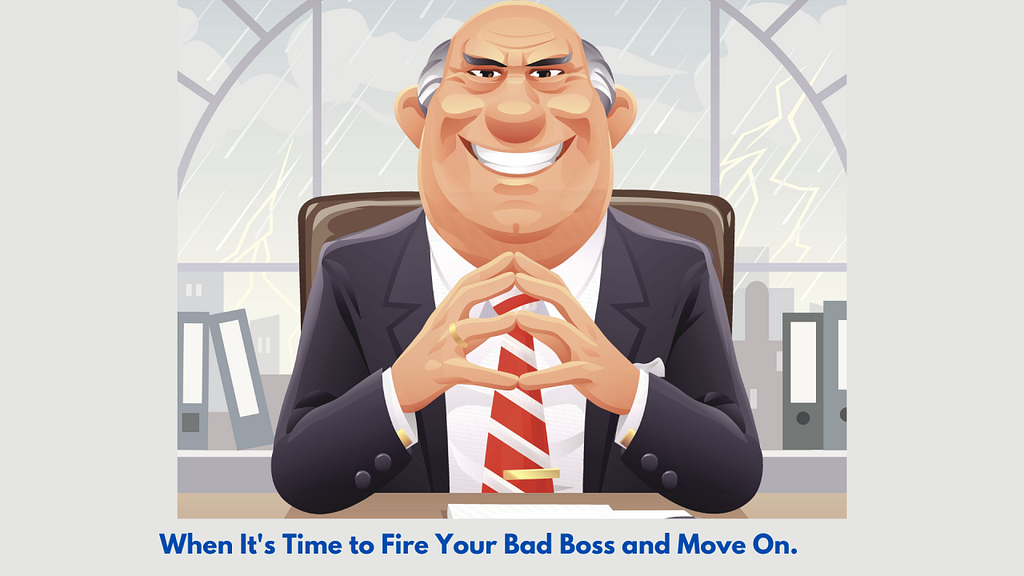
We’ve all been there, dealing with a bad boss who makes our work life a living nightmare. Whether they’re micromanagers, bullies, or simply incompetent, having a toxic boss can seriously impact our well-being and job satisfaction. But how do you know when it’s time to say enough is enough and make the bold decision to fire your boss and move on? Let’s explore some telltale signs that indicate it might be time to part ways with your bad boss and take control of your career. 👇
➡️ Toxic Work Environment: A bad boss can create a toxic work environment where negativity thrives. If your boss promotes gossip, encourages a blame culture, or fosters unhealthy competition among employees, it can be detrimental to your well-being and job satisfaction. Remember, you spend a significant portion of your life at work, and it should be a place where you feel supported and motivated. If your boss consistently contributes to a toxic atmosphere, it’s time to consider leaving for a healthier work environment.
➡️ Lack of Support and Recognition: A good boss should provide support, guidance, and recognize your efforts. If your boss consistently fails to acknowledge your achievements or provide the necessary resources for your success, it may be time to reconsider your situation.
➡️ Micromanagement: Constantly being micromanaged can be frustrating and detrimental to your productivity. If your boss doesn’t trust you to do your job and constantly scrutinizes your every move, it can be demoralizing and hinder professional growth.
➡️ Lack of Clear Communication: Effective communication is crucial in any workplace. If your boss fails to communicate expectations clearly, leaves you in the dark about important decisions, or doesn’t listen to your concerns, it can lead to confusion and frustration.
➡️ Unfair Treatment: If you notice favoritism, discrimination, or unfair treatment within the workplace, it’s a clear sign of poor leadership. A good boss should treat all employees fairly and ensure a positive and inclusive work environment.
➡️ Stagnation and Lack of Growth: If you find yourself stuck in a job with no opportunities for growth or advancement, it might be due to ineffective leadership. A good boss should encourage professional development and create pathways for career progression.
➡️ Consistent Violation of Ethical Standards: If your boss engages in unethical behavior or encourages a culture that goes against your principles, it’s a red flag. Staying in such an environment can tarnish your own professional reputation.
➡️ Constant Stress and Burnout: If your boss consistently places unrealistic demands on you, leading to chronic stress and burnout, it’s a clear sign that your well-being is not a priority. Sustained stress can have severe consequences on your health and overall happiness.
➡️ Unmanageable Workload: A boss who consistently assigns an unmanageable workload without providing adequate resources or support is setting you up for failure. This can lead to stress, mistakes, and overall job dissatisfaction.
➡️ Trust Your Instincts: If your gut feeling tells you that your boss is hindering your professional growth or causing harm to your well-being, it’s crucial to trust your instincts. Your happiness and success are paramount.
➡️➡️ Firing your bad boss and moving on is a major decision that shouldn’t be taken lightly. However, when your mental health, job satisfaction, and professional growth are consistently compromised, it’s important to prioritize your well-being. Remember, life is too short to spend it working under a boss who doesn’t value and appreciate your contributions. Trust your instincts, weigh the pros and cons, and don’t be afraid to take the leap towards a better future. You deserve a work environment where you can flourish and be truly happy.